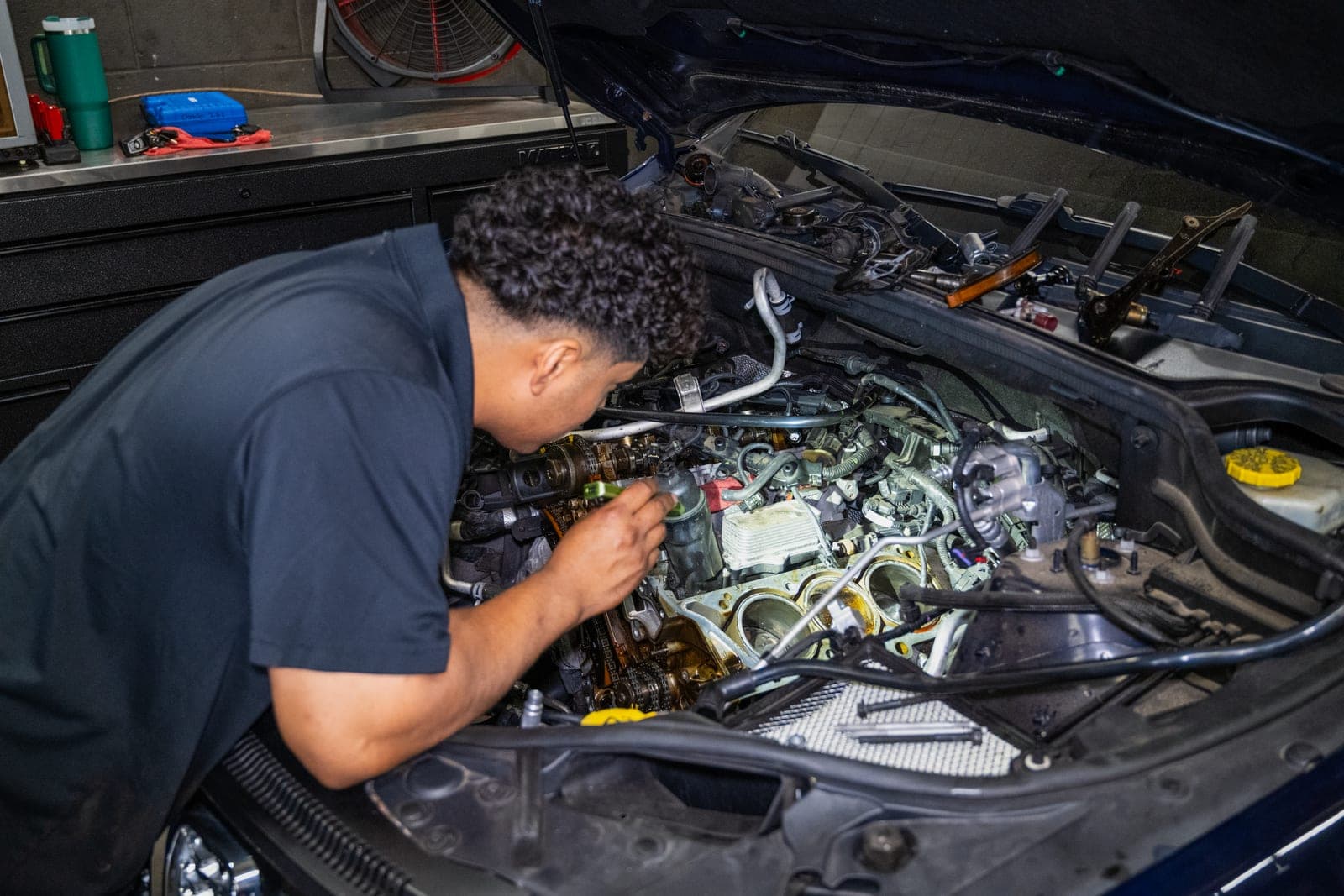
Most vehicles call for a coolant flush somewhere around every 30,000 to 50,000 miles, and some long-life coolants are rated to go further. Your owner's manual has the exact number. What the manual cannot see is how hard our summers work the system. Months of heat, stop-and-go traffic and towing break coolant down faster, and old coolant stops protecting the metal inside your engine. It turns acidic and starts eating at the radiator, water pump and heater core from the inside out.
A quick look tells you a lot. Fresh coolant is bright and clear. Brown, rusty or muddy coolant, or a layer of sludge in the reservoir, means it is overdue. Coolant type matters too: engines are built for specific formulas, and mixing the wrong ones can turn it to gel and cause the very overheating you were trying to prevent. For coolant or antifreeze service near you, bring it to our nearest shop, and ask about the Winterize Special, which includes a cooling system service.